Showing posts with label self-publishing. Show all posts

Saturday, 22 July 2017

Week Forty-One: When the Going Gets Tough, the Tough Self-Publish

I have a new book out.

It's a thriller: ALL YOUR SECRETS.

Much like my other thrillers, this is a full-length psychological thriller, with a twisty page-turning plot and a strong local atmosphere.

But unlike my other thrillers, this novel is self-published.

Why?

ALL YOUR SECRETS (UK Amazon)

Apparently the setting wasn't what my publisher wanted. My other two thrillers were set in Cornwall. They wanted a thriller set in London. This new book is set in the gorgeous South of France, a place I have visited many times and with which I have a natural affinity.

Last summer, I submitted two synopses and a 25,000 word sample of my South of France thriller to my publisher. Following a miscommunication of some kind, I mistakenly thought my editor was excited by the sample I'd sent and was planning to acquire the book.

Some months passed while I knuckled down and finished the book before my contract arrived. (Which is something many full-time writers end up doing, working on a book before the contract arrives.) I loved every minute of it though; it was a delightfully tactile, sensual book to write, and deeply sinister too.

In December, a few thousand words shy of finishing ALL YOUR SECRETS, I asked again about the contract. It was only at this point that I discovered my publisher did not want the book.

However, I received a contract for the other synopsis. The book I had not written. With only 8 weeks in which to write it, apparently.

I did the only thing I could.

I wrote the new book. And I did it within the required 8 weeks. It's currently at copyedit stage and will be published in January 2018.

Bizarrely, this is not unusual in publishing. It's the kind of thing that happens to writers all the time. Talented writers. Hard-working writers. Established writers. Full-time writers with bills to pay and no other way to pay them but through their own skill with a keyboard.

Most established writers can tell publishing stories to make your toes curl. Trilogies that flop and are abandoned as a lost cause, leaving one or even two books unpublished. Novels that are commissioned in conversation - like my own bestselling thriller, GIRL NUMBER ONE - and then rejected later, leaving a writer stuck with a book written to a very specific brief that they now need to sell elsewhere. Not always easy.

In the same vein, I was once tipped the wink at an editor-author coffee meeting that my latest outline wouldn't be acquired unless I converted the setting to Faeryland, because 'we're desperate for those'. I wrote 50K of the blasted thing before the editor was made redundant. Needless to say, the remaining editors were politely baffled by the Faeryland setting, and my agent was less than impressed too. I never did finish that one. Though maybe one day ...

So two years after I was forced to self-publish GIRL NUMBER ONE (a book rejected by over a dozen publishers, mind you, which subsequently sold 50,000 copies in a few months as a self-published title, hitting #1 in the UK Kindle Chart), I found myself with yet another unwanted novel on my hands.

You'd think I'd have learned my lesson by now. But hope springs eternal!

This time, I was not contractually permitted to offer it to another publisher - not under the name Jane Holland, at any rate, which has become my 'thriller' name.

However, I was given permission to self-publish ALL YOUR SECRETS.

When the going gets tough in this industry, the tough often end up having to self-publish. Not the most ideal situation, especially when a book has been written with a rather different arena in mind. But I have three children to feed and clothe, and this book took about 4-5 months to write and edit - an expensive time investment for me - so heigh-ho, self-publishing it was.

I proofed the book, made a cover, wrote a blurb, and started telling the poor, long-suffering souls on Twitter that my book was about to go live.

I had a pleasing number of pre-order sales. Those are my fans, and I thank them wholeheartedly for sticking with me!

Then it came out.

A self-published novel that isn't priced at 99p - instead, it's a modest £1.99 - is not the easiest thing in the world to persuade random punters to buy. Nor do I have the surprise of writing in a new genre to help me, as I did with GIRL NUMBER ONE.

So any sales you can waft my way will be hugely appreciated. This book has been written with all my skill and knowledge behind it, the experience of writing several dozen novels, and I feel certain many thriller-reading people will find pleasure in it.

I thank you all in advance for any retweets or Facebook shares or reviews or other promotional help you can offer this new and highly atmospheric book-baby of mine ... The blurb follows.

Thank you!

Jane x

ALL YOUR SECRETS (Amazon UK)

What happens when love is perfect? Too perfect?

When her glamorous cousin Emily drowns, Caitlin flies to the South of France for her funeral, full of bitter-sweet nostalgia for the summer they spent there as wild teenagers. Her aunt Tamsin, once a film star, now suffering from dementia, invites Caitlin to stay at her chateau high above the beach at Cap d'Antibes.

Suddenly the gorgeous, charming Robin is back in touch, son of a Hollywood film producer. 
Tamsin warns her to stay away from him, but Caitlin can't resist her teenage crush. Soon the pair are falling madly, deeply in love ... all over again.

But something doesn’t feel right. What was Robin’s relationship with her beautiful cousin? And what is her aunt trying so desperately to conceal? The chateau on the Cap may be beautiful, but it hides dark secrets.

Was Emily's death an accident? Or could it have been murder?

-- ALL YOUR SECRETS is an atmospheric psychological thriller that simmers with tension and will keep you guessing, from the bestselling author of GIRL NUMBER ONE and LOCK THE DOOR.

Saturday, 26 March 2016

Week Thirty-Three: On Self-Publishing, Bad Advice, and Being A Hybrid Author

I was so incensed by Ros Barber's recent piece in the Guardian, where she called self-publishers 'fools' and told us why she would never self-publish - but actually already does, she just somehow failed to mention that in her article - that I tweeted my disagreement to her. Nothing rude or clever, just this initial tweet, which more or less summed up my feelings at the time:


Unfortunately I can't represent her reply, as I have now blocked her account. Basically, she tried the back-pedalling approach, saying it was just a personal opinion. (Despite the general tone of the article not being that of an opinion piece.)


By this time, writer Jane Davis had joined in the conversation, asking about her strange use of pronouns for an opinion piece. Ros then claimed she had tried to avoid using 'one' and used 'you' instead, because 'one was stupidly posh', to which I replied, 'If the cap fits.' Heh.

To which Ros then replied, with all the cool professionalism and linguistic skill expected of a Creative Writing university lecturer:


It was at this point that I fell silent on Twitter, and began to seek out other opinions, to see how others had reacted to her piece. I found a few supportive murmurs of approval, almost overwhelmingly from literary writers in a similar position to Ros, and a large number of very angry responses from successful and happy self-publishers, who not unnaturally were aggrieved at having been referred to as fools in a major Guardian article, simply for having chosen a different career path.

Here is a good selection (warning: some of these contain strong language):

Dear Ros (an open letter from Jane Davis)

Roz Morris (Why I Self-Publish)

On Dismissive Snobs

Don't Do This Ever

The Elites versus Self-Publishing

An Open Letter To Ros Barber (TeleRead)

Past and Present Progressive

Rachel Van Dyken

The Passive Voice

The Digital Reader

The Poptart Manifesto

Caverns and Creatures (over 18s only)

If interested in the other articles and comments on Facebook and forums, you may wish to do some Googling yourself.

Suffice it to say, I discovered that I was not alone in my powerful reaction, and that some people felt even more strongly than I did about her 'sneering tone' as one writer put it.

But what happened next was even more amazing. For Ros Barber came out swinging, a day or so later, and happily told the world via her own blog that 'fool' had not been her first choice of descriptor for self-publishers. No, for the word she had originally wanted to use was 'twat', as Ros Barber openly admits under the heading: "You" = "One" = "Me". This between describing a champagne lunch in Paris and how she opened a Patreon account so she can be supported as a writer - presumably by people who do other work for a living - without having to descend to the grubby depths of self-publishing.

I have a screenshot of that section of her post, but feel it isn't appropriate to use it here without her permission. So do please read it for yourself.

Now for my own long history as a writer. Regular readers of this blog will know that I have had five books of poetry out, including one with Bloodaxe Books, received an Eric Gregory Award from the Society of Authors back in 1996, been Warwick Poetry Laureate, tutored for the Arvon Foundation and the Poetry School, and have been published multiple times as a novelist by so-called 'Big 5' publishers - Hachette and Penguin Random House, to be precise - since 1999, with nine full-length novels out (mostly historicals) over the past five years alone.

Not exactly inexpert, in other words.

I also turned to self-publishing in 2011 to put out books I felt were worth reading but had not found a home. In fact, I have currently over sixty novels, novellas and short stories self-published under various names on Amazon. I am easily bored, a fast and flexible writer, and like to turn my hand to different genres, often between bigger projects. Self-publishing means I can get a few quid back for my literary efforts rather than waste time trying to foist them onto a publishing world that is only interested in the next big thing.

Have they made serious money though?

Well, I have had some pleasing success in the UK with romcoms as Beth Good, getting most of my novellas in that genre into the Kindle charts at one time or another. Those books have kept us afloat as a family when my traditional contracts have dried up.

But my big breakthrough as a self-publisher came last autumn with Girl Number One. This is a debut thriller I had written on the suggestion of a traditional house editor with whom I had previously worked, who subsequently passed on it. My agent sent it out to multiple houses: all declined, for no worrying reasons, just vague refusals. Not right for us or the market, that kind of thing.

My agent eventually suggested I self-publish it.

I rewrote it, using the few suggestions given by some of those editors - thanks, guys! - and put it out with a self-designed cover in September 2015. A very well-known crime writer friend of mine emailed me soon after, generously suggesting I send it to a trad editor she knew who might like to take it on. The money on offer wasn't great, but it was surely better than self-publishing. I thanked her, but stuck to my guns.

BUY MY BOOK, etc.

Seven months on, it has sold almost 50,000 copies, hit No. 1 in the UK Kindle chart, and been picked up by Amazon Publishing's Thomas & Mercer crime and thriller imprint as part of a two book contract. A new edition will be published later this year. Given that the book is still selling well, currently priced £1.99 with a 70% royalty, I will leave you to do the maths on how much better it was for me to self-publish than go with a traditional publisher. I even published two bottom-drawer books alongside it at the same price, both of which have been well-received by Amazon reviewers and are also selling nicely, if not quite so meteorically.

To get the book selling, yes, I tweeted about it, though not to the exclusion of everything else. I ran a Thunderclap campaign. I chatted about it on Facebook, and I blogged etc.

All of which makes me a 'twat', according to Ros Barber's view of self-publishers. A twat who, if she had been foolish enough to listen to that kind of naysaying attitude, would still have her novel gathering dust in the fabled bottom drawer, marked 'REJECT'.

I very much want to make two things plain: one, that I love being traditionally published and do not prefer self-publishing, and two, that I strongly believe all writers must make their own choices without being swayed by someone else's opinion.

But, and this is a vital caveat, self-publishing is not a poor second choice for a writer. Sometimes it is a choice made boldly and for profit, and executed moreover with great skill and flair. And sometimes it is the only choice possible, and we must make of it what we can. Maybe a writer who can afford to be picky and hang on for that elusive contract, or who enjoys having to live on the streets or not being able to feed and clothe their children, or who believes someone else should do that for them while they labour over their priceless chef d'oeuvre, will prefer not to self-publish. But that will be their choice, and nothing to do with me, or you, or one, or Ros Barber.

Personally I love self-publishing. I love its freedom, its left-wing libertarianism, its inclusiveness, its fairness in levelling all authors to the same starting point of zero. But despite all that, given a straight choice, I would rather be traditionally published, if only because it means I will not have to put up with the knowing sneer on the faces of the literati when I say, yes, I put that book out myself.

The arguments Barber puts forward for traditional publishing in her Guardian article betray a lack of experience. As a successful hybrid author since 2011, I can tell you now that traditional publishers do not, as Ms Barber seems to believe, do all the marketing for you while you put your feet up and polish your sentences until they shine. Though perhaps literary authors are given carte blanche not to join in the promotional circus. I can't say for sure, because the only book I've published traditionally which might have been considered vaguely literary was with Sceptre back before the days of social media - back when you still got launch parties! (Yes, I'm a dinosaur.)

And if you don't believe me, believe this: I once had a Big 5 publicist who was greatly offended when I asked - finding myself alone on publication day, touting my book in a lonely chorus of one - why she did not have a Twitter account. She made it clear that budgets for marketing have vanished for all but the lead titles, and authors themselves are now the ones who are expected to promote their books, day and night, unless your second name happens to be King or Rowling - in which case you don't really need all those vast posters on the Underground, but will get them anyway.

And woe betide those who don't get on their keyboards and start clacking, 'buy my book,' to the universe, because their publishers will be quietly shoving their next manuscript in the bin. It may feel embarrassing to tell people you've just published a new book, especially if you have to keep repeating it for a few weeks, but it's part of the job of being a professional writer.

And this thing about traditional publishers getting your novel onto High Street book shelves? No, it doesn't work like that, or not for the vast majority of midlist titles. Very, very sadly. It may have worked like that once, but not anymore. Some books get ordered in good numbers. Others - most others, it seems to me - don't. Though you may be lucky and find one copy in the bigger stores. I am not privy to the way these things work, but I have failed to get bookstores to stock even my award-winning YA fiction in the past, which you would imagine must tick all those sales-criteria boxes.

In short, I'm sorry to say Ros Barber's article was muddle-headed, contradictory, insulting, and just plain wrong on a number of very important points. Yes, it's amazing to be in with a chance of a major prize listing. But how many books get that every year? Are you really hanging on because you think you're in with a shout of winning the Booker? (If so, go for it, my friend, and good luck to you.) Yes, it's lovely to have an editor and a design team. But self-publishers can buy in those services if they need them. Yes, it's nice to see your book in the shops. But that is no longer a given with traditional houses, if it ever was.

And finally, yes, it's fabulous to be taken care of by a team of publishing experts and to feel part of a large, well-respected company. But sometimes people don't enjoy that corporate experience, perhaps because the price of that security is adhering to rules and methods laid down from on high, and some writers don't function well in that kind of environment. And when your book doesn't sell well, nearly always for reasons beyond your control, and you get dumped, or your hardback is cancelled, or you are left off the guest list for that select Christmas party, it feels awful. Like you are a talentless hobo who will never again get past front-desk security in those shiny, intimidating, central London offices ...

In other words, traditional publishing is fantastic. It can make you a star, if that's what you are after. But it's not for everyone, and it's not the answer to every problem in an author's life. Neither is self-publishing. But going indie does open up new paths if others have been closed to you, or your temperament is not right for traditional publishing houses. Choose what you want, and what is within your grasp, and don't judge others for the route they have chosen.

So, a word to the wise. Before making any decision about whether to hold out for a traditional publishing deal or self-publish, make sure you check the credentials of the person giving you advice. Sadly, it's not always the ones in the know who write the articles that are supposed to steer your nascent writing career in the right direction.

As for my credentials, I write as Victoria Lamb, Elizabeth Moss, Beth Good, and Jane Holland among other names. Plus, in rather more fun news, a new name - and book, and genre - that will be coming soon! (With a traditional publisher, ahem.)

My latest self-published book is here. Feel free to tear it apart - but please, at least buy it first. It's only 99p.

And an author friend of mine, and creative writing tutor, Cathie Hartigan, has her own story to tell about self-publishing her debut novel SECRET OF THE SONG, and why it turned out to be right for her, here.

Monday, 25 January 2016

Amazon Publishing acquires GIRL NUMBER ONE

I'm utterly thrilled to announce the sale of my self-published debut thriller GIRL NUMBER ONE to Amazon Publishing's crime and thriller imprint, Thomas & Mercer.

GIRL NUMBER ONE: a No. 1 Bestselling Thriller

Some of you will recall the convoluted history of this book, which was rejected last year by well over a dozen publishers. I believed in the book, and wanted to find it a readership, so decided to put the book on the market myself. I did everything on my own: editing, cover, blurb, marketing, and published the book in September 2015 at 99p, under my maiden name Jane Holland.

After a slow start, GIRL NUMBER ONE entered the UK Kindle Top 100, and reached Number 1 in the UK on December 10th.

It stayed in the Number 1 position for five days, when I cannily put the price up to £1.99. It began to drop, but thankfully slowly, and remained in the Top 100 for 84 days. The book has sold coming up to 44,000 paid downloads to date, plus over 4 million reads via Kindle Unlimited.

I was called by an editor from Amazon Publishing back in November, who had read GIRL NUMBER ONE and was very excited about it. Although I had already made some super sales on my own, she felt that teaming up with Amazon would open up new territories for the book, and after some research and discussion with other authors, I had to agree. I was particularly pleased that she wanted to acquire a second thriller from me as well.

I took the offer to my agent, and finally signed the contract last week. GIRL NUMBER ONE will be re-edited and republished with a new cover by Thomas & Mercer later in 2016, keeping all its current reviews. Meanwhile, I will be working on a second psychological thriller for them, which we are currently discussing.

This whole experience has been a real vindication for me of my personal belief in this novel. So if you're out there now, with a rejected novel, and you're unsure whether or not to self-publish, I would say, don't wait for someone else's permission to believe in your book, just go for it. If you go down the same route I did as a self-publisher, you will have little to lose and a great deal to gain.

I've also used this opportunity to make my first-ever podcast, to announce this publishing deal and also discuss my screenplay entry in the Red Planet Prize. Why not check it out? It's only 5 mins long - and I'll be starting a whole series of writing podcasts soon, so you might want to subscribe.

My other novels like MIRANDA are selling well too, on the back of GN1's success

Saturday, 12 December 2015

My self-published thriller hits Number 1 spot in UK Kindle store

I'm utterly thrilled to announce that my self-published thriller, GIRL NUMBER ONE, hit the coveted number 1 spot in the UK Kindle store two days ago, on December 10th after 40 days in the Top 100.

I wasn't sure if it would stick there more than a few hours at first, but it has so far, apart from a few sideways shifts, but then returning to the top spot. Maybe a few days longer, if I'm lucky?

I was so shocked at first, really stunned, and only found out because the previous occupant of the top spot for many weeks, Kat Croft, author of The Girl With No Past, tweeted me to say I was #1. What a fab person she is.


The kids were even more excited than me and started making out revised Christmas lists, as you can imagine. And I spent the next 24 hours with my nose glued to the screen, sure that it would all end as suddenly as it had happened. But it clung on there, and I have never been so happy to stay in one ranking spot in my whole time as an indie author!

So now I would like to thank everyone who's been involved with helping to promote this book and getting GIRL NUMBER ONE to number one.

No one gets to a top ranking spot with an indie book without legions of friends on social media, tweeting and retweeting, sharing posts, and generally backing up an author and letting people know about their work. As far as I'm concerned, I could not have done it without you. Thank you!

Grab your own copy of GIRL NUMBER ONE on Amazon UK

You can read more about this title here, how it was rejected by over a dozen major UK publishers, and subsequently rewritten and self-published. I am completely thrilled to have hit the top spot in the UK ebook chart with my baby, and even if it only lasts a couple of days, I will never forget the wonderful feeling of being able to click on the Kindle Bestsellers' chart and see my OWN BOOK and name up there at the top.

Thank you all!

And for those who might like to see their own books up at the top of their charts, I have laid out some tips and pointers describing how I did it, on this blog.


Eleanor Blackwood discovers a woman's body in the same spot in local woodlands where her mother was strangled eighteen years ago. But before the police can get there, the body vanishes.
 
Is Eleanor’s disturbed mind playing tricks on her again, or has her mother’s killer resurfaced? And what does the number on the dead woman’s forehead signify?

Thursday, 19 February 2015

21 Ways To Write A Commercial Novel

I'm thrilled to be able to announce that the first twenty-odd weeks of this Creative Writing blog have been turned into an ebook!

Many thanks to everyone who contributed comments.

Bursting with up-to-date information and entertaining anecdotes from the world of writing and publishing, this guide also features helpful comments on writing from both new and established writers, including Rowan Coleman, Katie Fforde, Judy Astley, Lesley Cookman, Nuala Ni Chonchuir, Alison Morton, Elizabeth Moss and many, many others. A goldmine of advice for writers from an author of over twenty commercial novels, covering these general topics:

Beginnings
Fake It Till You Make It
Commercial Ideas
Research
Planning
Hooks And Teasers
How To Open Chapters
How To Close Chapters
Writing A Commercial Scene
Location, Location, Location
Writing Complex Characters
Staying Commercial
Novel Avoidance Syndrome
Writing The Commercial Synopsis
Dealing With Rejection
Other Writers
Four-Point Commercial Checklist
Changing Identities
Ten-Point Guide To The Commercial Novella
Writing Your Novel
Rowan Coleman’s Advice To New Writers 

It's entitled 21 Ways To Write A Commercial Novel and is out now as an ebook, only available on Amazon Kindle. 

Grab your digital version of this CW blog now - enlarged and with comments added! - from Amazon

Tuesday, 2 December 2014

Week Twenty: Ten Ways To Tackle The Novella


Writing a briskly paced novella can easily be fitted between longer projects.

Apologies for taking so long to resume my weekly posts on How To Write A Novel. I was beset by health issues while trying to finish my novel, and time got away from me.

But you behold me back in the saddle, and ready to apply the crop. If you'll forgive the slightly BDSM metaphor.

There have been times this year when I have not felt able to grapple with the larger canvas of my novel, but wished to produce shorter fiction for self-publishing. (One must eat, after all.) On those occasions, I have turned to the tricky form known as the novella. The novella is not long enough for the label of 'novel' yet too long for a short story. It's generally considered to begin at about the 15,000 word mark, or sometimes 20. And it ends in the region of 40,000 words whereafter it can safely be considered a novel.

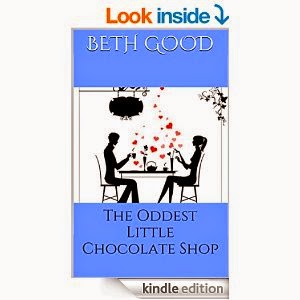
I have one short festive novella for sale at the moment, recently published, as an illustration of the lower word band: The Oddest Little Christmas Shop. And its sister novella, published during the summer under the pen-name Beth Good, which is rather longer: The Oddest Little Chocolate Shop. But even that is still too short to be a novel. Both these novellas have sold very well.

So how do you approach the writing of a novella as opposed to the novel form? Are there any inherent differences, apart from the merely technical one of length?

Here are TEN WAYS to tackle the writing of a novella.


1. One Plot To Rule Them All
The novella does not have room for multiple subplots. Decide in advance on your main plot, and perhaps one closely matched subplot, then execute the narration as simply as possible.  


2. Clear Premise or Theme
All stories have a basic premise or theme - crime never pays, or love conquers all - but in a novel, these 'messages' can be complex or layered. In a novella, the premise should be so simple or clear-cut, it can be gleaned from a one sentence description of your story.

3. A Few Good Characters
The novella is not the best place to unfold a sprawling family saga. Think of it as a cross between a fairy tale and a Beckett play. You can have more characters than a short story could comfortably hold, if you wish, but you will achieve greater intensity by focusing on a narrow range - say, two to five characters at most.

4. There Can Be Only One
Closely allied to No. 1, this is a requirement for simple narration. I don't mean simplistic - you could chose a strong and complex character as your narrator. Even an unreliable narrator. But choose either first person or only one third person POV narrator. If you stray from this, your style of narration should remain consistent, at least.

A short festive novella: one narrator, one POV, one storyline.

5. Short Scenes, Kept In Proportion
Avoid overly drawn-out ten page scenes. Plan your novella as a series of beats, like musical notation. Important scenes are a long beat, transitional scenes a short one. But even your 'big' scenes will be shorter than in a traditional novel. Think minimalism.

6. Keep The Line Taut
All stories require tension and conflict, but in a novel, you have time to build slowly to a climax if you wish. In a novella, as in a short story, you need to hit the ground running. Establish your basic conflict in the first pages, then add to it in each new scene until you reach maximum tension, like the Buckaroo game where the donkey eventually kicks off his load.

7. Experiment With Structure
I normally divide my novellas into chapters, because I feel that provides a novel-like structure to shorter fiction. But you could experiment with alternative methods of division: a line break between sections could work well in a short novella with only one narrator, and maintain tone very nicely. Or you could break up sections with a repeated gimmick: a quatrain of poetry, for instance, or a riddle, quotation or aphorism in italics. Have fun with it!

8. Rounding Out And Tying Up
Some writers approach the novella as a novel in microcosm. But a novel may have very different reasons to a novella for existing, and one thing that divides them is the idea of overarching structure. A novel's overarching purpose or structure may be very complex indeed, even diffuse, which fits our way of reading novels over an extended period. With a story that can be read in one sitting, plot structure needs to be strongly rounded, with a distinct sense of closure or completion, as any loose ends or vague petering out will be glaringly obvious.  

Sometimes a novella is so successful, it can spawn a series or brand: Oddest Little Chocolate Shop


9. Pitching To Publishers - Or Not
Within popular genres such as science fiction, fantasy or romance, there is a traditional market for the novella. Many publishers, especially those who run a strong digital list, will take on a good novella that fits their guidelines on length and content. If you have written a niche/genre novella, look at publishers' guidelines for submissions within that field. Many digital start-ups, for instance, welcome novella writers. Though be warned, you are unlikely to be paid much. My advice, therefore, is to self-publish where possible, and market on social media as a 'quick read' to fans of that genre. For non-genre novellas, especially shorter ones, the market remains vague and unpromising. Good luck!

10. The Novella Series
The short form of the novella lends itself well to a series. This can be linked by title alone - see my Oddest Little novella brand above - or by characters, setting, or even theme. It is always useful to plan the series before starting, but you may come to it after one or two publications have been successful. Probably best to keep word count and structural divisions similar between titles, as readers expect this. Maintaining a particular narrative style will also please readers who liked your first book for it. A five book series is a good length for a series, especially for shorter novellas, and when self-publishing, you can produce a higher priced omnibus edition at the end.


QUESTION: What makes you choose to read a novella rather than a novel?

Thursday, 31 July 2014

Week Fourteen: Four-Point Commercial Checklist

"Murder will out," they say, and many in publishing still claim to believe the same of good books. "Great writing will always find a market," we are told as writers, along with that golden oldie, "All good authors will be published eventually."

This sop to our vanity is no longer true, if it ever was. Or it can be true if we are prepared to self-publish.

Not every writer will get their books into the shops. And the journey to get them there - and keep them there - is more complicated and fiendish than anyone outside commercial fiction would ever believe.

Commercial publishing is shrinking, and author lists are shrinking with it. More rapidly than ever. There is every possibility that you will write a good book this year or next, perhaps even a great book, yet be unable to place it with a reputable publisher. Or you may have talent and a reasonable track record, yet fail to attract a publisher willing to go to contract on the strength of a proposal alone. Meanwhile the bills have to be paid ...

It's tempting to assume that every book taken on is now a major risk for publishers, except new work by the very top names - or complete unknowns. Yes, dear new writers with good books, you are not in too bad a position in terms of attracting publishing deals. New writers have not yet 'failed', so you will always be more attractive to the money people whom editors have to convince when they decide to acquire a book. But woe betide if your debut sells less well than expected. Because it's all about sales these days. And I can perfectly understand why publishing is fast becoming a closed shop. In this culture of fear, risk-taking is akin to professional suicide. Far better to give a flat no - or offer the most meagre terms possible - than lose money on a book deal and face the firing squad yourself.

So what's the answer to this narrowing of the publishing arteries?

As I see it, there are several courses open to writers in this position. You can resign yourself to diminishing advances and precarious contracts, and maybe even shift into self-publishing, or you can change what you're writing to become even more commercial, in the hope that this will save you from the graveyard of good writers that has become mid-list publishing.

Literary writers will, quite rightly, reject that last idea. Literary fiction has always been a precarious medium - and anyway, out there on the razor's edge is the best place for experimental fiction to thrive. If you expect no money, and are happier with a small publisher who understands what you're trying to do and will support you with that, you will not miss earning your living by words alone.

"I'm not compromising my creative spirit to churn out a blockbuster. I love this garret."

Mid-list authors keen to explore the freedom and adventure of self-publishing may shrug off traditional publishing at this point and find a new path through these dangerous waters, and good luck to them. I have paddled there myself and know it can be very liberating to self-publish, not to mention lucrative.

For truly commercial writers who do not wish to self-publish, however, adapting to the demands of this brave new marketplace is the only viable response. Nobody wants to drag themselves to the desk every morning feeling like a dinosaur, reading their sales figures with a heart sinking as rapidly as the numbers.

But what does it mean, to write more commercially?

The answers change in specifics according to each publisher and genre, but in general you need to ensure this simple Four-Point Commercial Checklist applies to your manuscript, at least to some degree:

Strong or high-concept story, preferably strikingly original in some elements, but not so original that it won't fit into current book categories. Check it can be described in a simple phrase - or better still in the title itself.

High stakes action. Start with life and death, then work upwards. The more people potentially affected by your story, the higher the stakes.

Accessible, cleanly written prose. Your book can be as complicated plot-wise as you like, but it must be written for as broad a readership as possible. Keep sentences uncluttered, say what you mean, be elegant if you wish - but save your deathless prose for your literary alter-ego.


Larger-than-life characters that keep a reader turning the pages. (You may think you write these anyway, but it's a fair bet you don't. Think larger. No, even larger than that. You need characters a reader will never forget.)

As you can see from that list, writing more commercially is nothing to do with writing in a popular genre or following trends or writing longer or shorter books. It's about making your books memorable without becoming melodramatic, and simple without becoming simplistic.

It comes down to being a great storyteller. And above all this, you also have to believe in your story and not write in in a cynical, 'this will get me published' way.

Tough, huh?

"Jim knew he only had thirty seconds to save the entire universe ..." Are your stakes high enough?

If you knuckle down and do all those things, and still can't get a publisher to take your book, let's face it, you're screwed. But don't worry. There's always self-publishing. More on that in another post.

Oh, and my latest novel WITCHRISE is published today!

QUESTION: What do you think makes a book commercial these days? And would you ever change the way you write just to keep being published?

Wednesday, 16 July 2014

Week Twelve: The Company of Writers

RNA Conference 2014. Yes, that's me in the foreground. Photo by Anita Chapman.

My apologies for the late posting of this blog. I recently returned from a long weekend at the annual conference of the Romantic Novelists Association and have been recovering. Since the conference is what's uppermost in my mind right now, my blog post this week will be about the key reasons for novelists to attend a writers' conference, plus some associated thoughts.


Richard Lee (Waterstones, at podium) and Matt Bates (WHS Travel) talk sales to a packed lecture theatre, RNA Conference 2014

Conference-going can be exhausting. It does not have to be, you can always duck out and spend a few hours alone in your room, or go for a walk or drive to clear your head. But I spend so much of my life locked in a small room with my thoughts, I prefer to suffer exhaustion and not waste a moment of the conference experience napping or walking. When I am not much older, I suspect slipping away to my room will become a necessary part of staying the course, because it is genuinely tiring to get up early, go to bed late, move relentlessly from one session to coffee break to another session, chat with fellow writers, and perhaps attend the odd kitchen party, all for two to three days in a row. But for now, I'm still pushing through the pain barrier to make the most of my time there, albeit with a rictus grin on my face ...

So here are the chief reasons why a writer, especially one new to the industry and hoping to be published in the future, should attend a writers' conference. At a conference, we can:

  • Swop horror stories about writing and publishing
  • Allow ourselves fresh hope
  • Develop a feel for the market
  • Take the opportunity to show our work to agents and editors
  • Bare our souls
  • Drink deep
  • Take (and compare) notes
  • Learn from experts
  • Give presentations and share our knowledge
  • Become part of a community
Coffee time chat with fellow authors, RNA Conference 2014

At this year's RNA conference there was much talk of 'the death of the midlist', i.e. the increasing erosion of those writers and titles which are not expected to sell mega bucketloads, but normally sell a reasonable amount, and so get published but do not enjoy the kind of massive promotional push from their publishers that a writer such as Stephen King or Philippa Gregory might expect. (Ironically the kind of writers who desperately need that push are the ones who rarely get it, the financial risk being considered too steep.) Advances for midlisters are dwindling along with their sales, and publishers are dropping huge swathes of midlist authors in favour of brand-new faces or top-notch commercial hits. This cull is not about talent or market fit. It's simply about money and there not being enough of it to go round. So the new and the sure-fire get it instead of the cannon fodder.

There is no easy answer to this dwindling of earnings. Some writers have called for publishers to pay their authors larger percentages as royalties, and there is a case for this; the 8-10% we traditionally enjoy on paperback retail sales was fine back in the days before the collapse of the Net Book Agreement, when discounted sales were not permitted and most successful writers made a good living. Now though, with piracy and supermarket discounts and multi-media competition working against us, and our much-beleaguered books selling in far smaller numbers at knock-down prices, that meagre 10% barely allows us to earn out our advances - if we got one at all. Digital royalties are improving and approaching 30-40% in most places now, but of course digital prices are even lower. So we lose out both ways.

A drinks reception sponsored by Kindle Direct Publishing: some famous faces here ...

Conferences are places where the open discussion of such problems can happen in a wide arena packed with industry die-hards and newbies alike, some traditionally published, some self-published, some unpublished but ever-hopeful of success. But success has become a moveable feast. Success for writers used to be six-figure contracts and all the trimmings: book launches, posh dinners with agents, international tours. Now, for the midlist at least - the stalwart foot soldiers of publishing - it has become about selling enough to stay in work, even selling enough to stay alive. And it feels as though nearly everyone below superstar level is suffering, even those who seemed unassailable ten years ago.

So a conference not only gives us a chance to talk to our heroes and press our latest manuscript into the hands of agents and editors, it also allows us to discuss these industry failings en masse, and hopefully suggest remedies to each other.

Not that the remedy to publishing's current sickness lies in our hands alone. But we can suggest ways to continue making money from our art, to diversify, to seek new outlets for our writing, perhaps to leap into the wind and become publishers ourselves. And even though the outlook is bleak, there is still the solace of the company of other writers, other creative souls trapped in the same impasse, passing the bottle at some late night party in student accommodation ... just like the old days.

QUESTION: do you attend writers' conferences, and what do you hope to gain from them? Has attendance at a conference ever improved your writing and forwarded your career?

Monday, 23 June 2014

Week Nine: Juggling Pseudonyms

Increasingly, writers are being asked to split themselves in two. Or three, or four. Or five.

Writing as schizophrenia: the freedoms and hazards of the multiple-pseudonym approach.

I'm not talking about being a writer and also having to develop the skills of a marketing and promotional campaign manager, public speaker, social media guru and whatever else lies ahead for us in this increasingly beleaguered profession. I'm talking about the need to write different genres under different names.

For the uninitiated, this may seem like nonsense. Stick to one name, and publish whatever you like under it. Well, it's an option. But because of the way the human psyche works, or perhaps because of the way publishing has worked for the past few hundred years, a writer tends to be associated with a certain kind of publication. So let's say you have always written crime fiction, then suddenly produce something different - say, historical romance - under the same name, you are likely to land yourself in trouble.

Firstly, you will annoy your loyal readership by producing something that nonplusses them. Secondly, you will annoy your new readers who, loving your fabulous romance, order some of your backlist only to find themselves reading crime fiction.

By Joanne Rowling, aka J.K. Rowling, aka Robert Galbraith

This may be one possible reason J.K. Rowling chose to publish her new crime novels as Robert Galbraith (the fact that male writers often reach a wider readership and are more likely to be nominated for literary prizes and win them is a whole other kettle of publishing fish).

So you say, right, my writing name will be Jane Acrostic for crime, and Jane (or Joe) Bloggs for romance.

Then you realise the awful truth.

Because it doesn't stop there, at the choice of a pen-name. All writers are now expected to promote themselves wildly and without shame, like people who leave saucy business cards in phone boxes. If they don't, and subsequently fail to sell, or even if they do and subsequently fail to sell, they may end up without a publisher.

So both these writers - Jane Acrostic and Jane/Joe Bloggs - need separate Twitter accounts. And Facebook accounts. And probably email accounts. And blogs. And reader lists. And marketing plans. And bloggers to reach out to.

Some writers plough on and write in other genres under a third or fourth pseudonym. The sky's the limit if you are a flexible enough writer, and have the time and patience to tweet and blog under a gazillion names.


You could keep stories under each pen-name in separate notebooks or doc folders, to avoid confusion.

In this cannon fodder-rich, advance-poor world of books, you may find yourself split another way: between traditional publishing and self-publishing. You may be an established traditional novelist with flagging returns who chooses to self-publish their rights-reverted backlist. Or you may be unable to make ends meet on the advance offered by your traditional publisher, so have to moonlight as Juliet Boobs on Smashwords or Amazon's Kindle Direct Publishing, tossing off a quick sexy read every few weeks to draw in a few extra pounds to feed the electricity meter. Or maybe you got funnelled into writing one kind of book early on, and have always yearned to write something totally different.

So let's say you choose to go down this route, writing in several different genres. How might it work?

I have done this myself, writing historical and YA fiction as Victoria Lamb and steamy historical romance as Elizabeth Moss, both for traditional publishers, not to mention a few other names that collectively bring home the bacon. My brother tells me this is known as a 'portfolio career' in music, which is his field. I know how it works for me. But everyone is different. I shall describe my own experience here, and hope others may comment on this post to share their experiences too.


By me
Also by me

First, you need to discuss a change of genre with your agent and/or editor, if you have one. They will probably be resistant; it's hard to establish a writer's name in the first place, let alone TWO names. But let's assume your first name is flagging a bit, and they are less hard to persuade. Or you are 'between publishers' and free to relaunch your career. Unless you plan to self-publish - in which case you might want to consider making writerly friends within the new genre and finding someone who might advise you on a quid pro quo basis - then you will probably need to produce a large sample of the proposed manuscript and a synopsis, to indicate ability to work in this new genre. You may even need to produce the entire book before a contract will be agreed. (Some hard grafters do this every time, though I try to avoid it at all costs. There's always another bill waiting to be paid ...)

Once a change of genre is approved - and this is far from certain, publishers being shy of change at the moment and inclined not to take risks - you will need to discuss your new name.

Yes, this is by me too

Some writers - like Iain Banks/Iain M. Banks - have chosen to use the same name, but stuck an initial in the mix for the new genre. I personally find that confusing, but that's just me. You might want to use another related name, or something personal to you - Lamb was my mother's pseudonym, Moss my first married surname, and Victoria and Elizabeth are my middle names. Or you could be totally cynical and choose something that fits the new genre: something hard or sinister for crime, something sexy and enticing for romance. Never forget, your mission is to build an entirely new persona, and your pseudonym will be at the forefront of that effort.


By my mum, Charlotte Lamb

If you find it hard to juggle several writing names, get organised. Use whiteboards or corkboards, and list projects, accounts and contacts under each name. Be careful with online passwords for email/blogs etc; you're supposed to have different ones for each account, and not keep a written record, so make sure each password is memorable for that name, or use some Master Password software to help you. I frequently use Twitter on iPad, which allows me to keep all my Twitter accounts permanently logged in and switch between them with a couple of flicks, so I can post easily on different accounts within a space of seconds. TweetDeck also allows this, though I find it unwieldy with more than three or four names, as it lists accounts horizontally instead of on separate flickable pages. You may want to see what works best for you.

Develop a solid persona for each name, and stick to it wherever possible. I tend to leap between names on social media, as so many people know I have several, there's no point hiding the fact, plus I find it amusing to troll myself under another name. But you may prefer to draw a strict line between them. Certainly it is less confusing for readers if you keep each pseudonym in a separate 'box' and never mix them up. I find it a touch dishonest to create totally new biogs for each name, but that's only because so many people know who I really am in person. If you're keeping them separate, and will never meet anyone in the flesh, you can invent a whole new life for your biog. Just make sure you don't 'come out' later and risk alienating people who only read your books because they wrongly believed you were from Basingstoke, or a former concert violinist, or a devout Anglican.

By - you guessed it - me!
If you choose to do a public event under one pen-name, and are reasonably well-known under another, be aware you may be exposed at that point. People take photos, and innocently blog or tweet them, unaware of your guilty secret. So if you don't want your trad publishers or your jam-making Quaker romance fans to know you also wrote that smutty tale of swinging couples, don't turn up at the London Fetish Fair to promote it - unless clad in a concealing gimp mask.

Decide early on how much promo you can manage for each name, and which name will benefit most from each kind of promotion. Book marketing is not 'one size fits all.' To sell in a new genre, you usually need to do some research: find out where your main readership is likely to be hanging out on social media, or sites like Goodreads, then target it. Make as many friends as you can, insinuate yourself into groups, copy what other writers do. Yes, it's a bit creepy. But you can relax somewhat once the initial push is done. You just need to get your new pseudonym known and accepted in the best places for your book, and after that, you can concentrate on the new books you're writing and on building a career in that genre.

And if you think all that sounds like bloody hard work, it is. Welcome to my day.


QUESTION: Do you have more than one pen-name, and how do you cope with the separate promo? Or do you have a question about writing under more than one name?

Monday, 28 April 2014

Week One: How I Began Life As A Novelist

My name is Jane Holland and I'm a novelist.

Put like that, being a novelist sounds like an addiction, like alcoholism or compulsive shopping. And perhaps that's not a bad analogy. Writing a novel is so hard, such an exhausting long haul, a back-breaking labour of love, that to embark on it - and finish - the writer must be obsessed with their subject. Or with the idea of writing a novel, at least.

To kick off this series of discussions how novel-writing, I thought it best to discuss how I got into the field myself. Not simply to lay out my credentials for droning on about fiction for the next 51 weeks, but also to demonstrate the often shocking vagaries of the profession.

Being the daughter of highly literate writing folk, I have written more stories than I can remember, starting at the tender age of about twelve with a novella about a time-travelling caveman that I called A Wild Magic or something similar. My efforts then were all children's fantasy, the genre I knew best, with a healthy dose of Tolkien thrown in. My parents read my books, but did not hugely encourage me, I'm unsure why. Perhaps because being a novelist is such a precarious profession, or because they held the view that children who are going to become novelists generally have to be stopped from constantly writing - instead of, say, doing their homework - rather than prompted to write more.

My debut (Sceptre)
Beyond these amateur efforts, and some poetry, I did little else of note fiction-wise until my late twenties, when I wrote a diary piece for the London Review of Books called Diary of a Hustler, via a circuitous route of poetry and snooker playing. It was spotted by various literary agents, and I was flatteringly head-hunted. I chose Curtis Brown as my first literary agency, and published my first novel about two years later under my real name of Jane Holland with the Hodder imprint Sceptre: Kissing the Pink.

A sports novel for women from the school of Nick Hornby, it was marketed as chick-lit and not surprisingly vanished without trace.

My agent retired, and I had fallen out of love with Curtis Brown - despite them selling the film rights for Kissing the Pink several years running - so I looked about arrogantly for someone new. Writers, take note: I did not manage to sign with another literary agent for ten years. During that time I published five books of poetry and wrote a fair number of novels, five rather disreputable ones published under a pen-name to scratch a living, the rest odd literary efforts sent on the merry-go-round of London agents.

No one wanted them. Or rather, no one wanted me.

My mother having died, I tentatively approached her agent. He was not interested in the first novel I sent and kindly suggested someone else, but I felt too despondent to chase that lead. I had some more children and brooded for a few years, picking at various stories, then was offered a job editing romantic fiction at a small independent publishing house. I did that for a year, and got my mojo back. I decided to take my fiction career in hand, wrote some historical romances - my favourite reading matter at the time - and approached my mother's former agent again.

The Queen's Secret, my first novel sold through LBA, went into both Asda and Tescos.

We met in London for a drink. I was horribly nervous. He wasn't interested in the novels I had written, but asked if I could write something else historical, in a more ambitious style, as fast as possible. I said YES, probably baring my teeth like a soldier going over the top, and my extraordinarily fruitful association with Luigi Bonomi Associates had begun.


Witchrise, the final book in my young Adult Tudor Witch Trilogy with Random House.

That was in 2010. I have just finished my ninth historical novel sold through LBA to my two publishers Random House and Hodder, and am starting a tenth with high hopes of finding a publisher for it. (I didn't, in fact, but self-published it and it became a bestseller! See GIRL NUMBER ONE on Amazon.) I also self-publish short stories and novels under various pen-names - such as Beth Good - when between manuscripts under contract.

In this series of blog posts I intend to wander loosely about the subject of novel-writing, and hope someone out there finds it helpful. I'm not a 'rules' person, so you are unlikely to find many prescriptive posts about the strict How-Tos of writing. My approach is more discursive, exploratory, questioning. That is, I may ask open-ended questions about fiction, and not necessarily expect to find an answer. Or I may look at how other novelists have done things, and of course consider my own thoughts and challenges as I edit and write my novel(s) over the course of the year.

I am particularly hoping for dialogue with readers and writers, so please feel free to use the comment box below, and/or engage with me on social media. Ask me questions, suggest issues I can consider in a future post, put your own views across on novel-writing.

Find my main writing account on Twitter at @janeholland1

I'm Victoria Lamb Author on Facebook and @VictoriaLamb1 on Twitter. 

This is my main website: Victoria Lamb Books.