Showing posts with label top tips. Show all posts

Monday, 11 January 2016

Week Twenty-Nine: Five Resolutions For Writers

So we're well into 2016, and most of us will have turned our eyes away from the holidays and towards our writing schedule for this year by now.

These are not so much resolutions for me personally as they are thoughts and ambitions for writing and writers in general. I put them together to remind myself of the priorities we face as writers, and also to stop me from slouching.

RESOLUTION ONE: Know Your Destination

We too often start projects in a rush of enthusiasm without any clear indication of where they will end up. This can be an exciting and provocative choice; it can also lead us down blind alleys in creative terms. Some projects do not have the legs, or some fatal flaw lurks at their heart, and we know the market simply isn't there for such an idea, or not as told in those terms. We are writers, yes, which means we should work from our creative hearts, not to someone else's brief. But that is not carte blanche to write any old nonsense that excites us for five minutes but can't be sustained over the life of a novel.

Novels are long-haul jobs, they are hard work. Make sure you know your destination, or at least have some end point mapped out, before you set off through chapter one.

Can't wait to get home and start my new novel. Not sure what it will be about, but I have the perfect opening ...


RESOLUTION TWO: Finish What You Start

This is similar to Resolution One, except that was about knowing your destination - this is about actually reaching it. If you don't finish your writing projects, if you abandon them partway through because they turned out to be blind alleys (see above), you are teaching yourself to fail.

Don't teach yourself to fail. If it sucks, why did you start it in the first place? (Again, see above.) But okay, now that you know it sucks, finish it anyway. That way, you can at least try to fix it afterwards. You can't fix an unfinished novel, because a novel is a whole entity and its success depends on that sense of balance, on that wholeness.

An unfinished novel is like a bucket with no bottom, or a half-built house. No good to anyone.


RESOLUTION THREE: Keep Re-Examining Your Vision

Writers change and so do their visions. Make sure you are not hanging onto some outdated version of the world in which you are one kind of writer, when actually you have become someone quite different.

Sometimes people ask you to do something that sounds impressive or difficult - maybe they're offering to pay you handsomely, or to write something outside your comfort zone - and that doesn't fit your vision of yourself as a writer. So you turn them down.

Who are you kidding? Maybe once upon a time staying true to your vision was a noble idea. But we're in a global recession and someone has offered you work. So maybe it doesn't fit that lofty vision you had when you started out - you know, the one where you accepted the Booker Prize, and people shook your hand in the street, or tweeted that your novel saved their lives.

Visions like that are a distraction to the real job of being a writer. You have a bank balance. If you can't do the work they're offering, for whatever reason, fine, turn them down. But if it's just because you're not that kind of writer, get over yourself. We're all that kind of writer. Some of us are just pretending otherwise.

I, oh I, wrestling with creation, the word, the writtenness of it all, oh ...

RESOLUTION FOUR: Write As Often As You Can

Everyone says this, and that's because it's important. Maybe you have a demanding day job, maybe you have writer's block, maybe you're sick, maybe whatever. You should still try hard to write little and often. Because the ability to write is like a muscle - you can lose it if you don't exercise it.

I hate writing exercises, personally. I never do them. But if I'm 'between novels' and still want to write, I do the novelist's equivalent to doodling. I get out a notebook or grab a scrap of paper, an old envelope, whatever, and sketch out a plot. Characters. Timelines. Quotes in my head. Snippets of dialogue. And sometimes those ideas grow into stories, into novels, into a series.

Every novel begins with a single word. So write it. Then another one. Then another one.

Have you read a book recently? A book that excited you and made you want to put pen to paper yourself?

RESOLUTION FIVE: Keep Reading, Keep Being Influenced

Once you're a reasonably successful novelist, the very thing that got you there in the first place - i.e. reading and books etc. - is ironically the thing you don't have time to do. Now you have deadlines and proofs and edits and synopses and actual novels to write, and no space for reading stories by other people. Sometimes you don't even have the inclination to do it either. Maybe you are frightened a new important novel will 'pollute' your vision (see Resolution Three), or that you might feel beaten-down by a rival's success, or the force of their language, or their seemingly endless army of fans.

But influence can be a powerful tool. Professional jealousy can open your head up like a tin can and remind you of the wonders inside it. And if you can't face reading your peers in a certain genre, then read other genres or engage with stories via another medium, like film or television, or even art.

The story is what matters. Keep opening yourself up to story and to character, and you will keep replenishing your bucket. (You know, the one without the hole in it. The one you dip into the well each day before you begin to write.)

Good luck!

Tuesday, 8 December 2015

Cathie Hartigan asks: What Kind of Novel Are You Writing?

I'm thrilled to have my friend and fellow author Cathie Hartigan from Creative Writing Matters as my guest on the 52 Ways blog today. Creative Writing tutor, novelist, talented musician, and an administrator of the Exeter Novel prize, Cathie has many strings to her bow. And as you can see, she is going to lead us through the thought processes and research that led her to write her fascinating debut novel SECRET OF THE SONG.

SECRET OF THE SONG was released on October 6th and has garnered much critical praise. I have read the novel myself and can highly recommend it: a rich but delicately woven time-slip, it will transport you to a complex, musical world you may never wish to leave.  


 Cathie writes:
So you have a great idea of what your novel will be about, and are keen to get going, but before you start tapping, there is a crucial question you must ask yourself. What sort of novel am I writing? Make your decision carefully and base it on the sort of writing you can do, rather than the writing you wish you could do.

I’ve always written contemporary women’s fiction. My most successful short stories have been told in the first person, via characters with strong, individual voices. I love writing about relationships between families, friends and lovers, I’m curious, keen on puzzles and I find Italy, singing and a sense of humour irresistible.

So what sort of novel would I write?

Two separate incidents provided me with the idea for my novel, Secret of the Song.

The first arose at a choir practice when we were asked to sing a piece of music by the Italian Renaissance composer, Carlo Gesualdo. Who was he? I had no idea. The music was really difficult and I don’t think we even made to the end of the piece. There were murmurs of disapproval about Don Gesualdo though, so I decided to look him up.

It transpired that Carlo Gesualdo was a bad man. In fact, two centuries before Byron, he was much madder and badder and decidedly dangerous. Plus, whereas Byron was a lord, Carlo Gesualdo was a Neapolitan prince. Gesualdo’s story, and that of his lovely wife, Maria and her dashing lover, Duke Fabrizio was equal to anything the Tudor court in England could muster at that time.

But the retelling of an incident already documented isn’t a story; it’s an account.

Then, coincidentally, I heard a programme on the radio, during which musicians and neurological experts discussed the power of ‘ear worms’, those maddening tunes that go round in your head for days. Was Gesualdo mad because of his music, I wondered? More significantly, could his music send the musicians who performed it mad?

Here was a story. I would write a contemporary mystery about a singer haunted by the song she was singing. Yes, that was it. 

But during further research, I read the witness statement of a servant, and felt hugely sympathetic towards the poor girl caught up in such a dreadful situation. With only a little imagining, her voice was in my head. Yes, she must be heard.

So I had two heroines: one in contemporary Exeter, and one in Renaissance Naples.  I felt there was only one sort of novel that would do the story justice. Secret of the Song is a time-slip mystery. The decision to write the dual narrative as alternating chapters proved challenging, but it also kept both plot lines moving forward at a good pace.

My top tip?
Remember that every reflection, every look back, brings the plot to a dead stop. Ask yourself whether it is necessary, and what is lost if you leave it out. 

Cathie Hartigan


When a song by the mad composer, Carlo Gesualdo, is discovered in Exeter Museum, trouble descends on the group asked to sing it. Lisa is full of enthusiasm at first, but she soon becomes convinced the song is cursed. Can Lisa find out what mystery lies behind the discordant harmonies? Will she solve the song’s secret before her relationship with Jon breaks for good and harm befalls them all?

 
In Renaissance Naples, young Silvia Albana is seamstress and close confidant of Don Gesualdo’s wife. When Donna Maria begins an affair, Silvia knows that death is the only outcome. But who exactly will die?

And where is Silvia’s own lover? Why is he not there to help her?
 
As a big fan of the work of Barbara Erskine, I was delighted to discover a new Time-slip author whose first novel is a delight. I’m sure Cathie Hartigan has a great future.
Margaret James - Writing Magazine 

Explore SECRET OF THE SONG on Amazon UK

Thursday, 15 October 2015

Week Twenty-Five: Promoting Books, or, We Interrupt this blog for a THUNDERCLAP

UPDATE: July 2016
The new revised edition of GIRL NUMBER ONE is out August 9th 2016 with Thomas & Mercer, and I'm running a NEW Thunderclap Campaign to help promote it. 

Do support me by clicking the link below!


Forgive the theatrics. But it's all in a good cause. Honest.

As a writer, you may have heard of 'Thunderclap'. It is rapidly becoming THE new method of promoting books on social media. But what on earth is it? And how does it work?

Let me explain ...

You may have 100 followers on Twitter or 5000. Fair enough. You may even have a few thousand friends on Facebook. Great stuff. But using Thunderclap, you basically harness the combined social reach of 100 or more friends and followers, giving you a MASSIVE group to which you can promote your book.

You join up at Thunderclap and decide on your goal - 100 people tweeting a link to your book on Amazon along with a short promotional message is the method I went for - then start asking other people in your social media reach, i.e. your friends on Facebook, Twitter, Tumblr or LinkedIn, to "support" the campaign.

Supporting a campaign means visiting the Thunderclap site, agreeing to let them access your info on one or more social media accounts - just like when you access any app like Instagram that posts elsewhere for you - and clicking Support This Campaign.

You can choose which social media account you want to use for supporting it, then Thunderclap will post the other person's campaign tweet or post ONCE ONLY on a certain date at a certain pre-arranged time.

That's the THUNDERCLAP effect. One hundred people or more at once saying, 'Read this book!'across a range of widely differing social media accounts.

And for those who feel this will be an annoyance, I doubt it. Many of the people who are supporting my campaign do not particularly overlap in their friends with my own, so a hundred or so tweets or posts going out to several hundred thousand people is unlikely to cause much annoyance.

And it's FREE. No obligation to buy and no hidden cost to you. Just an agreement to let Thunderclap post my chosen tweet on your account come Monday October 19th.

But there's a catch ...

If you don't reach your chosen number of supporters - which is 100 for me - then it will not happen at all. The campaign will have failed, and no messages will go out anywhere.

To help boost my numbers, I joined the Thunderclap Campaigns Facebook group and agreed to reciprocate with other campaigns in return for votes. Without that help, I doubt I would have made my goal. Worth considering.

A large proportion of people who share your message asking for supporters WILL NOT support the Thunderclap campaign themselves, for whatever reason: some may dislike allowing access to their account even for a one-off tweet or share; some openly dislike book promotion in any form (a staggering number of these also believe it's possible for independent authors without publisher back-up to sell books without actually telling anyone about them, just by being nice and hoping people notice they are authors, LOL); others may not want the kind of book you've written to appear on their social media feed. I myself discreetly passed on reciprocating with some of the writers who backed my campaign, mainly because I did not want to seem to be supporting certain kinds of dodgy erotica. I felt bad about that, but staying 'on message' is important on social media.


UPDATE
After The Thunderclap

Following my Thunderclap on Monday at 5pm, when 117 people on social media reposted my message to a social reach of nearly 655K people, to check out GIRL NUMBER ONE on Amazon, at first nothing seemed to happen.

It was a little worrying.

Then slowly sales started rolling in late that evening, and the day finished at 100 copies sold at £1.99 during that 24-hour period. The borrowed pages read (via Kindle Unlimited) reached 14,000.

The ranking shot up 70 places to #150.

That was the Thunderclap effect and I was fairly pleased with it. It's now starting to subside a little, as one might expect. But you can help stop the slide by sharing this post, my book details, or buying the book itself in paperback or ebook.

Many thanks!

UPDATE ON THE UPDATE 
November 16th 2015

It is now almost ONE MONTH since the Thunderclap for Girl Number One.  

Today, the book is at #14 in the UK Kindle chart.

As far as I'm concerned, a well-organized Thunderclap campaign with strong follow-up promotional efforts on social media can reap huge rewards.

Overall, feedback and response have been very positive. One (male) writer on Twitter told me it was a mistake to do a Thunderclap as it would 'put people off the book' and was annoyed when I disagreed. I believe it's safe to say he was mistaken.


UPDATE ON THE UPDATE ON THE UPDATE
December 6th 2015

It is now a little short of two months since the Thunderclap.
 GIRL NUMBER ONE is #5 in the UK Kindle store
A few days ago it reached #3, my highest-ever ranking with any book.
Nuff said.


UPDATE:

GIRL NUMBER ONE 

reached #1 in the UK Kindle chart

mid-December 2015

and stayed there nearly a full week.

THANKS!!!


GIRL NUMBER on Amazon UK and on Amazon US.  

UPDATE: July 2016
The new revised edition of GIRL NUMBER ONE is out August 9th 2016 with Thomas & Mercer, and I'm running a NEW Thunderclap Campaign to help promote it. 

Do support me by clicking the link below!

Girl Number One on THUNDERCLAP


Monday, 18 May 2015

Guest Post and Giveaway: Alison Morton on Writing Trilogies


Alison Morton's ROMA NOVA trilogy
Trilogies. As a reader, I love them. What is more satisfying than following a set of characters off into a new adventure, the sheer joy of seeing them develop as people, facing up to new challenges, discovering new family secrets or buried treasure or resolving long and bitter rivalries over the generations? Or perhaps they have a more internal theme focusing on the emotional ups and downs of three generations of women who come to live in a new country and pass wisdom up and down the family chain.

But I’m also a serial reader.

When I put the third book of a trilogy down, I’ve been known to sniff, gulp and reach for a strong cup of tea. The world I have loved for nearly three hundred thousand words has shut its door, the characters have vanished to the other side of nowhere.  Then to my joy (and not a little relief) I discover the author has written a fourth book, a follow-on. I have my credit card out before you can say ‘Harry Potter’.

As a writer, it’s both similar and different. When I started my first novel, INCEPTIO, I had no idea what I was doing. Writing was an impulse, a reaction to a dire film and thinking I could produce something better. But not even halfway through the first draft, I realised I had a far bigger story than I’d anticipated.

So I did the classic thing - I turned it into a trilogy.

The trilogy dilemma
SUCCESSIO, the last Roma Nova thriller in the original trilogy, set off into the world last June. The heroine had finished her journey with birth and deaths, traumas and triumphs, and I had closed her file on my computer. Now for wine, sun and leisure.

But one of the main secondary characters was whispering in my head, ‘Tell my story. You know you want to. Think of all those readers, begging for more. You’ll get fat, lounging by the pool. Get back to work!’

Juno!

Yes, this was the tough, no-nonsense Praetorian Aurelia Mitela insisting. Now, it’s not good for your future health if you disobey a Praetorian special forces officer, let alone one who’s also one of the most powerful women in Roma Nova. And her story of undercover work, loss, struggle and living at the most dangerous time in Roma Nova for three centuries – the Great Rebellion – was too tempting.

So begins a second trilogy within the Roma Nova world; it starts in the late 1960s with AURELIA and reaches to the 1980s. Fascinating how technology and attitudes have changed in fifty years! Research traps abound; some inventions we think recent were around in the late 1960s, others are surprisingly modern.  

This time round, I have the benefit of my own experience plus Roma Nova is familiar territory. But the gods punish hubris so I re-read the first trilogy and marked up the passages that referred back to the times when Aurelia had been a young woman. With a new three-book cycle within an established series, readers can start their Roma Nova adventure with AURELIA without having to plough through the first three.

But I do hope they will be so entranced, they'll want to go back and grab the first three books!

 AURELIA is out now in ebook (various formats) and paperback.

AURELIA: available now on Amazon
 Late 1960s Roma Nova, the last Roman colony that has survived into the 20th century. Aurelia Mitela is alone – her partner gone, her child sickly and her mother dead – and forced to give up her beloved career as a Praetorian officer.

But her country needs her unique skills. Somebody is smuggling silver – Roma Nova’s lifeblood – on an industrial scale. Sent to Berlin to investigate, she encounters the mysterious and attractive Miklós, a known smuggler who knows too much and Caius Tellus, a Roma Novan she has despised and feared since childhood.

Barely escaping a trap set by a gang boss intent on terminating her, she discovers that her old enemy is at the heart of all her troubles and pursues him back home to Roma Nova...


Read about Alison and Roma Nova: www.alison-morton.com
Connect with her on Facebook: http://www.facebook.com/AlisonMortonAuthor
Twitter: https://twitter.com/alison_morton @alison_morton


 GIVEAWAY!

A signed copy of AURELIA (paperback) is available to one of our lucky readers!

Just comment below, telling us whether you prefer to read stand-alone fiction or a series like a trilogy, and your name will be entered into a draw. (UK only)

The draw will take place on Monday 25th, so please do remember to check back to see if you've won!

Tuesday, 2 December 2014

Week Twenty: Ten Ways To Tackle The Novella


Writing a briskly paced novella can easily be fitted between longer projects.

Apologies for taking so long to resume my weekly posts on How To Write A Novel. I was beset by health issues while trying to finish my novel, and time got away from me.

But you behold me back in the saddle, and ready to apply the crop. If you'll forgive the slightly BDSM metaphor.

There have been times this year when I have not felt able to grapple with the larger canvas of my novel, but wished to produce shorter fiction for self-publishing. (One must eat, after all.) On those occasions, I have turned to the tricky form known as the novella. The novella is not long enough for the label of 'novel' yet too long for a short story. It's generally considered to begin at about the 15,000 word mark, or sometimes 20. And it ends in the region of 40,000 words whereafter it can safely be considered a novel.

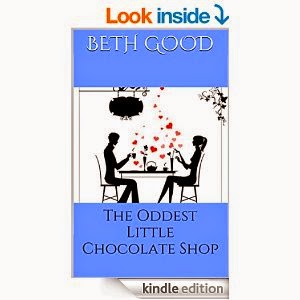
I have one short festive novella for sale at the moment, recently published, as an illustration of the lower word band: The Oddest Little Christmas Shop. And its sister novella, published during the summer under the pen-name Beth Good, which is rather longer: The Oddest Little Chocolate Shop. But even that is still too short to be a novel. Both these novellas have sold very well.

So how do you approach the writing of a novella as opposed to the novel form? Are there any inherent differences, apart from the merely technical one of length?

Here are TEN WAYS to tackle the writing of a novella.


1. One Plot To Rule Them All
The novella does not have room for multiple subplots. Decide in advance on your main plot, and perhaps one closely matched subplot, then execute the narration as simply as possible.  


2. Clear Premise or Theme
All stories have a basic premise or theme - crime never pays, or love conquers all - but in a novel, these 'messages' can be complex or layered. In a novella, the premise should be so simple or clear-cut, it can be gleaned from a one sentence description of your story.

3. A Few Good Characters
The novella is not the best place to unfold a sprawling family saga. Think of it as a cross between a fairy tale and a Beckett play. You can have more characters than a short story could comfortably hold, if you wish, but you will achieve greater intensity by focusing on a narrow range - say, two to five characters at most.

4. There Can Be Only One
Closely allied to No. 1, this is a requirement for simple narration. I don't mean simplistic - you could chose a strong and complex character as your narrator. Even an unreliable narrator. But choose either first person or only one third person POV narrator. If you stray from this, your style of narration should remain consistent, at least.

A short festive novella: one narrator, one POV, one storyline.

5. Short Scenes, Kept In Proportion
Avoid overly drawn-out ten page scenes. Plan your novella as a series of beats, like musical notation. Important scenes are a long beat, transitional scenes a short one. But even your 'big' scenes will be shorter than in a traditional novel. Think minimalism.

6. Keep The Line Taut
All stories require tension and conflict, but in a novel, you have time to build slowly to a climax if you wish. In a novella, as in a short story, you need to hit the ground running. Establish your basic conflict in the first pages, then add to it in each new scene until you reach maximum tension, like the Buckaroo game where the donkey eventually kicks off his load.

7. Experiment With Structure
I normally divide my novellas into chapters, because I feel that provides a novel-like structure to shorter fiction. But you could experiment with alternative methods of division: a line break between sections could work well in a short novella with only one narrator, and maintain tone very nicely. Or you could break up sections with a repeated gimmick: a quatrain of poetry, for instance, or a riddle, quotation or aphorism in italics. Have fun with it!

8. Rounding Out And Tying Up
Some writers approach the novella as a novel in microcosm. But a novel may have very different reasons to a novella for existing, and one thing that divides them is the idea of overarching structure. A novel's overarching purpose or structure may be very complex indeed, even diffuse, which fits our way of reading novels over an extended period. With a story that can be read in one sitting, plot structure needs to be strongly rounded, with a distinct sense of closure or completion, as any loose ends or vague petering out will be glaringly obvious.  

Sometimes a novella is so successful, it can spawn a series or brand: Oddest Little Chocolate Shop


9. Pitching To Publishers - Or Not
Within popular genres such as science fiction, fantasy or romance, there is a traditional market for the novella. Many publishers, especially those who run a strong digital list, will take on a good novella that fits their guidelines on length and content. If you have written a niche/genre novella, look at publishers' guidelines for submissions within that field. Many digital start-ups, for instance, welcome novella writers. Though be warned, you are unlikely to be paid much. My advice, therefore, is to self-publish where possible, and market on social media as a 'quick read' to fans of that genre. For non-genre novellas, especially shorter ones, the market remains vague and unpromising. Good luck!

10. The Novella Series
The short form of the novella lends itself well to a series. This can be linked by title alone - see my Oddest Little novella brand above - or by characters, setting, or even theme. It is always useful to plan the series before starting, but you may come to it after one or two publications have been successful. Probably best to keep word count and structural divisions similar between titles, as readers expect this. Maintaining a particular narrative style will also please readers who liked your first book for it. A five book series is a good length for a series, especially for shorter novellas, and when self-publishing, you can produce a higher priced omnibus edition at the end.


QUESTION: What makes you choose to read a novella rather than a novel?

Thursday, 4 September 2014

Week Nineteen: Beginning and Ending Chapters

Commercial novels demand tighter chapter endings and beginnings than other kinds of books, to maintain tension across a broad readership.

In any commercial novel, from thrillers to romances, the writing is generally expected to be fast-paced and gripping wherever possible. Notable exceptions aside, there is little space for leisurely meandering towards an important event, or for interesting sidetracks between events. Once the reader puts your book down, perhaps to sleep or have dinner or get off the train, you have lost them - unless you can leave your main character in such a breathtaking spot at the end of each chapter that they have no choice but to pick it up again as soon as possible.

Beginning A Chapter

There are two or three basic ways to begin a chapter.

The first is to pick up exactly where you left off at the end of the last. This is where the chapter division is not there to indicate time passing, but delivers a 'beat' in a scene, i.e. a pause which allows vital information to sink into the reader's mind. Maybe some great revelation has just been made, or a terrible confrontation enacted. A pause is required, for both reader and character to dust themselves off, reevaluate the world of the story, shake their heads at someone's villainy, or gather another important clue in a whodunnit.

The second method is to break up the story into intervals or sections of time, i.e. indicate that time has passed. So the last chapter ends with, Jack turned over in bed and let himself drift off to sleep, giving up on the impossible question of how a cat had been able to escape a locked room. The next chapter might then begin, with perfect convention, The next morning, Jack woke with the answer. A secret trapdoor!

'The next day Muldoon's alarm woke him at 7am as usual.' Wait! That's not a very exciting way to start a chapter. Hmm. 'Muldoon had only been asleep a few hours when he was woken by an almighty explosion.' Yes, much better.

Or the chapter break might serve as a useful point at which to jump to another character's point of view. So the chapter might begin, At that very moment, Sylvester the cat was walking along a narrow wall some ten feet below Jack's window, his slitty green eyes fixed on the bouncing approach of headlights in the dark. For less experienced writers, this method is usually better than shifting viewpoint midway through a chapter, even if it means very short chapters; no offence, but it is genuinely difficult to shift POV during a scene or within a chapter without jarring the reader's trust in the narration. And the shorter the chapter, the more tense and fast-paced the narration, so you win both ways.

In general, keeping chapters short is a sound commercial approach. Our attention spans as readers are getting ever smaller as books contend with time spent on television, films and computers. The theme should be simple, the blurb a soundbite, and the chapters as succinct and purposeful as you can make them.

So how long should a chapter be? This depends on genre and individual tastes. Sci fi novels set in space are often great tomes with chapters as long as your arm, for instance. But anything over ten pages needs to earn its place in a would-be commercial novel, and even a three page chapter is not a bad idea if the episode contained within it has the force of a sledgehammer. Basically, anything that gives a genre novel more of a 'hook' for a reader also endows it with more commercial value.

Literary writers, this does not apply to you. Though frankly, you will not ruin your stories by making them snappier.

Ending A Chapter

The end of a chapter is a moment fraught with danger. Will the reader continue onto the next chapter, and possibly risk lack of sleep or missing their train stop, or will they put your book away and start again tomorrow? Obviously writers don't want readers to starve themselves or avoid visiting the toilet in order to read on. (Honest, guv.) But if you can leave a reader on tenterhooks and keen to return to your book after a necessary break, you are less likely to lose them.

Ending a chapter on dialogue is always a great choice. Dialogue can contain far more in a shorter number of words than prose narration can ever hope to do, because good dialogue reveals character, and character drives plot. So with dialogue you get both pace and character, along with nuance and plot. It's a winning combination.

But what kind of dialogue?

In general, you need something that will shift the narrative in a new direction, such as a vital or shocking reveal: 'Sylvester is an alien, not a cat,' she explained, bursting with excitement, 'and his species are planning to invade Earth!' Or a piece of information that will make the reader turn the page in a fever of anxiety: 'Get out, get out, the whole building's wired to explode!' 

Readers browsing in bookshops or libraries (and editors looking for new writers!) often scan the first few chapters to get a sense of pace. So make sure your first few chapters in particular begin and end in exciting ways.

If you don't have anything that explosive to hand, don't worry. You only need to suggest that the plot is about to shift or a huge reveal is about to happen. It's called cheating, and it's okay so long as you don't do it too often in a book, because that can alienate your reader very quickly. For instance, in the above example where Sylvester is disclosed at the end of the chapter as being an alien, the next chapter could begin, 'Don't be ridiculous,' Jack exclaimed, shaking his head in disbelief. 'Sylvester is not an alien, he's a real cat. I just had him neutered.'

If going with prose instead of dialogue, a short paragraph is best. Something that both sums up what came before and points to what's next. Even better is a pithy one-liner, if you can get that to work without over-egging the pudding. But don't forget that the need for pace and the 'reveal' of vital information still applies. For example: Sylvester sat motionless, watching the vast mothership descend out of cloud.

But the main idea with both dialogue and prose endings is to make it impossible for the reader to chuck the book aside and carry on with their lives without giving another thought to your story. So whichever kind of chapter ending you choose, tick the checklist to see if it swings the story at a right-angle, reveals character, drives plot, and makes your reader turn the page.

QUESTION: How do you prefer to end your chapters - and why?

Thursday, 21 August 2014

Week Seventeen: Researching Your Novel

Every novel requires some form of research, even if it's only where you might buy a ribbon for an old typewriter like this. Sounds like detective work? It has its moments ...

Every novel needs to be researched, not just stories set in bizarre or exotic locations, or historical novels. If you already know your world well - you work or live there, for instance - this research may be minimal. But you will still need to allocate time to do it. For instance, does your fictitious law firm share its name and location with a real-life company? Better change that, or you risk being sued. And how many doors does that particular make of hatchback have?

Basic tips include: keep a notepad at the ready, in case you spot an answer to a riddle while out and about, or hear an interesting fact on television; keep copious, detailed notes of all your research, preferably in one place (I learned this the hard way); if taking notes from the internet or a book, keep a note of URLS, article titles and author names, page numbers and full publishing details (remember to do this even when you cut and paste, so you can refer back to that website if you later need more details or are compiling a list of acknowledgements or a bibliography). Also, importantly, if a fact is vital to your story, double or indeed triple-check it with a respected source. Don't just accept Wikipedia's version, in other words!

Try to research in a meaningful way. If you're looking up a fact about handguns, don't get sidetracked into reading three chapters on field artillery, however fascinating. Don't let research become a fetish.

Some facts can be easy to research or double-check. A few clicks and you have that missing data. But for complicated settings, especially historical ones, you may need to compile a vast wealth of accurate, double-checked details, some of them hard to discover in the first place. Sometimes thorough research may be your only path to a finished manuscript. Sometimes you can type Chapter One with an easy conscience, and deal with issues as they come up.

So how to go about this?

I can't write this novel yet. I don't even know what my main protagonist's surname should be. He's Russian, born 1947, his father was a political prisoner ... Time to hit the books!

Research First, Write Later
Some writers prefer to do their research before they begin the novel. That way, all the information they need is close at hand. They can plan a book, secure in the knowledge that their plot hinges on a particular stagecoach journey time in 1823; not only have they checked that timetable, they know all the inns along the way, what kind of meals they might have offered a weary traveller, and even how the coach driver would have been dressed.

But this method - research-first, write-later - holds considerable dangers for the unwary writer.

If you think research is more entertaining than the hard work of writing the actual novel, and have not set yourself a cast-iron deadline for beginning to write, you may find yourself drifting. One month, two months, three ... and the novel is never started. In the end, you may find you've spent a whole year on researching the minutest detail of your proposed story, and are now so bored by it, you chuck it over for some new, as yet unresearched idea.

To avoid this danger, decide beforehand when you are going to start writing the novel - and stick to it! Anything you don't know by then will have to be researched on the hoof. Which brings me to method number two for researching a novel.


Researching on the Hoof
Those impatient to start chapter one may well decide they know enough to begin writing without further research. Hopefully these are not delusional types whose efforts will soon end in disaster, but those who have prior experience of writing about this world or location - or are in the category I mentioned above, i.e. they know it intimately because it's their everyday world. My own preference is for plunging in at page one, perhaps after a cursory check on date, time, location for my story, then researching on the hoof, i.e. as I write.

The method is simple.

You're writing an historical novel, and your protagonist is changing her dress. You can't recall what might have been worn to an informal soiree in the late Regency. Or you know the gown, but not the shoes. What would they have looked like? For my Tudor stories, I have used the internet and also fantastic book and website resources like The Tudor Tailor to ensure my descriptions of clothes for various social classes are as accurate as possible. So to check those facts, to get each tiny detail correct, you stop work for a few minutes - hopefully not more than an hour! - and do your specific research. Then get back to the job of writing.


Visiting Locations
Whichever method you use, if you need to visit a certain location for your book - a local factory, for example, or an area of London - you will need to plan ahead. There's no good visiting after you've written that scene, as seeing a place with your own eyes may completely change your approach. If it proves expensive - for instance, involving a trip abroad - try to find a way to use that location again. That way you're getting more than one book for the cost of a single research trip.

Take notes and photographs, which should be as exhaustive as possible. Write down what you photographed and in which order so you can readily identify your shots later. Buy postcards, guide books, local maps. Grab secret candid shots of the locals for your own use. Making your own film on an iPhone or camera is also advisable if you need to really capture the atmosphere or remember how you got from A to B. After all, you don't know when you will be able to return there. (You could even share it on Youtube and social media, and get a little advance publicity for your project.)

Don't simply wander a location though, taking notes and photographs. You're a novelist, which means you need to write in the narrative voice of a person who is actually in that location, at a certain time, doing particular things. So approach your visit as if you are that person. Imagine where he or she would stand or sit, how they might act, what kind of smells and sights and textures they might experience. Make notes later, if you like, but that part may need to be deeply internalised. Drawn into yourself and experienced through the senses of your narrator, in other words. And that's something no external fact-finding can replicate.

Plus, don't forget that research is a legitimate tax-deductible expense if/when your book is published. So even if you don't have a contract yet, keep all receipts from research trips and general expenses.

When writing THE QUEEN'S SECRET, I was lucky enough to live only a few miles from Kenilworth Castle, where all the action takes place in 1575. Being a 'local' meant I was able to visit the location frequently, check all my facts personally, and really soak up the atmosphere.

Writers' Resources
Never underestimate the usefulness of long library visits, especially to specialist libraries - though getting a Reader's Ticket may be tricky - or a good research book written by an expert, but the internet is where you're likely to find most nuggets of information quickly. It's also great for turning up odd information, the kind that's hard to pinpoint in a book. The toilet habits of medieval princes, for instance.

Join groups on Facebook in your chosen field, or on Goodreads, or an informative group blog like English Historical Fiction Authors - anywhere people gather to exchange information. If really stuck, try a shout-out on Twitter and hope people retweet your request for information until someone turns up an answer or a possible resource to try. Social media is a great place to ask research questions, so make friends with other people interested in your research area. Some historical programme presenters are actually on Twitter and might reply to a question or two, if you're polite and not pushy.

And get yourself a Youtube account, or browse there. If you can't visit a location, you may find it's already on film on Youtube - someone's amateur holiday film, perhaps, or a genuine expert's view, perhaps compiled themselves or a snippet from a television programme. It's free, and it all helps.


Employing the Writer's Flannel
Sadly, it's not always possible to find the fact you need, or not at the time you need it. In that case, you may need to use 'writer's flannel' to bypass your problem. This is a kind of textual shuffle, a little narrative sleight-of-hand, whereby you appear to have used a fact, but have actually sidestepped it. In other words, when in doubt, write around the unknown fact and hope nobody notices. They probably won't. 'Her shoes pinched' is better for conjuring up an atmosphere than a detailed description of the stitching and fabric of a pair of Regency shoes.

There can be such a thing as too much research, often evidenced by large wodges of barely digestible information or description. The ideal is to digest it all yourself, then only use a small percentage of what you know, keeping the rest on hand so that you sound like an authority on the subject, yet never bore the reader with your excess of knowledge.

Queen Victoria finished her slice of plum cake and glanced at the text message alert on her iPhone ... wait, that doesn't sound right. Oh hell, no one will notice!

Finally, remember that no one version of history, or indeed any other 'fact', is the definitive one. Some facts and dates may be reasonably solid and easily verified: when Queen Victoria died, when the First World War began, the current members of the cabinet etc. But most 'facts' are rather more slippery than that. How long is a piece of string, how many minutes to soft boil an egg? Bear this simple truth in mind when taking notes: just because the writer of an article or book is respected as an expert and has letters after their name does not mean their version of the truth is the most accurate one. We all have opinions and biases, and that includes 'experts'.

I repeat: trust no one. Do your research, double and triple-check it, then write what you believe to be the truth. Oddly enough, that's all anyone else can do too.

QUESTION: do you prefer to research beforehand or on the hoof? Does it jar you out of a book when you spot a fact that's wrong?

Thursday, 14 August 2014

Week Sixteen: Where To Start Your Novel

Some writers make notes or write outlines beforehand; others plunge straight into the story ... but where do they start?

There is nothing so wonderful as beginning to write a new novel. The failures are all ahead of you, only a few preliminary notes and a feeling of excitement - which could be indigestion - are behind you. You've been bottling it up for days, weeks, perhaps even months. Now at last you can write your first few pages ...

But where to start? When Victoria sits down to write her sixteenth blog post? Or a few minutes beforehand, when she gets that life-changing call from her agent? Perhaps you should go further back, start with some cleverly-sketched backstory: maybe that day many decades ago when she stuck her puny ten-year-old fist in the air and vowed to become a bestselling novelist, or when she had that incredible idea for a kickass story while balancing on an inflated gym ball in her exercise class?

The start of your novel is not about set-up and backstory, though it can involve those to some extent. Rather, it is a sacred moment, breathing life into clay you have shaped with your own hands. Your world is born out of nothing; your characters rise up and start making things happen; a predestined chain of events is set in motion, racing toward an unseen finish line. The beginning of every story is that moment when a storyteller invokes the magic territory by saying the four magic words, 'Once upon a time ...'

Heads turn in the room, a hush descends, people settle, and your readers willingly step alongside you into the magical world of The Story.

"Once upon a time ..." Erm ...

None of which helps the novelist in any practical sense, though it may put more pressure on her to get it right. So let's look at more practical methods of deciding where to start.

I am not speaking now to those people who launch into faeryland like The Fool in the old Tarot pack, not looking where they are going but whistling merrily, a pack on their back, stepping out over the abyss as though it were solid ground. Those people are either deeply talented magicians, implicitly trusting the story to keep them from falling, or they are idiots who think planning will stifle their creative spirit. I am talking instead to the rest of us, mortals with a brain, who know storytelling is an art but also know themselves to be capable of whacking great mistakes, so like to venture out with some kind of story map in their pack, from 'X marks the spot' on the back of an envelope to the most up-to-date Sat Nav.

So where to begin?

Most writers know that character shows itself most clearly under pressure. Like the old Latin saying, in vino veritas (truth in wine), a character reveals itself through the choices made when the usual social constraints have fallen away, perhaps because a zombie has come crashing through the living-room window or they've discovered a bomb under the table.

The door opened, and Captain Darkblood stood there, a snub-nosed revolver in his hand pointing right at my heart. "Step away from the typewriter, Victoria. You've written your last adjective."

Equally, the time to begin a story is when your character is under pressure. Not just any pressure, but an inciting pressure, a pressure that forces them to take action. Not pressure that crushes and near-destroys your protagonist, in other words - that comes later, at the climax - but just enough pressure to make your character jump up and start dancing. So Victoria is feverishly typing her blog post when the call comes in: her agent says, 'Now look, Victoria, I don't want you to worry, but apparently there's a bomb under your desk.'

How's that for a hook?

Obviously though, as readers on page one, we can't really care - beyond basic human sympathy - about a character we don't know yet. So Victoria is about to be blown to smithereens. So what? Go ahead and let the bomb detonate. The world could do with one less writer. (More chance for the rest of us, eh?)

So either we need to make the reader care from line one, which is tough to achieve, or we need to show the character just before the pressure situation, to reveal them as sympathetic and someone we ought to care about, someone funny or kind or clever or worth our attention in some way. A child, obviously, gets an instant sympathy vote from most people (except other children!) but in most cases the writer's main protagonist will be an adult. So how to make them sympathetic in a hurry?

Okay, you might say. Let's have Victoria's young curly-headed son pop his head round the door in the first paragraph, and say sweetly, maybe with a tear in his eye, 'Hey, mum, you haven't forgotten we're visiting Grandma in the hospital, have you? I've baked a special cake for her.' To which Victoria will reply, 'No, darling, of course not. I know how important it is for you to visit your dying grandmother who may snuff it at any moment and ... Oh wait, is that the phone?' Cue agent with bomb warning/threat. Now we have Victoria, her young son, and a specially baked cake about to go skyhigh. Plus the dying grandmother will never get to see her family again ...

Seriously though, the real key to making a reader care what happens to your main protagonist is narrative voice.

That's it. Everything else is just scenery, window-dressing.

Narrative voice does not have to be trustworthy or sympathetic in the conventional sense; it can trick us, lie to us, even make our stomachs churn. But it must force us to keep reading.

This initial narrative voice - which can be first, third, even second person - must enter the reader's head from line one and hold them spellbound. So make it a magical voice: intriguing, clever, intimate, confidential, witty, sexy, dangerous, inviting, moreish - right there in the reader's ear. Your narrative viewpoint character on page one is your storyteller, even if this is a prologue and a character who is never seen again. The narrator can change later, especially in a multiple perspective novel, but the first voice or voices encountered are all-important. The narration can be sympathetic or even vile; but we must care what happens next. Because this is the voice that says the magic words, 'Once upon a time ...' and woe betide if they fail to hook the reader.

So to recap, very simply, in answer to the question 'where does my story start?' the answer should be, 'at or preferably just before a moment of inciting pressure, involving a narrator we immediately care about or whose potential failure intrigues us.'

So dump the backstory and start just before the big bang instead. You'd be surprised how little backstory you really need, and how much can be conveyed in a line or two of dialogue, further on, on a strictly need-to-know basis. Make the reader trust your narrator, and they'll come along for the ride without the backstory.

QUESTIONS: which novels have you read that reeled you in from page one, and how did the writer do it? Do you ever have problems knowing where to start your story, and how do you deal with that?

Monday, 4 August 2014

Week Fifteen: Writing Scenes

Cut the waffle, and make something happen ...

This may seem obvious, but novels are made up out of scenes. Yet one of the problems even established writers can face is moving their characters in and out of scenes cleanly.

You've probably read examples of this yourself in published novels: the characters are talking, but nothing changes. Nothing happens. The reader is forced to gnaw her own arm off out of sheer frustration.

So what's gone wrong? The writer is 'between scenes' here, unsure how to manoeuvre her characters out of one situation and into another. So what you get first is an introduction scene - rather like a green room at a festival - where the characters wait before going on stage. Later you will have a debriefing scene where characters discuss the events of the preceding scene. The writer tells you what is going to happen; then shows it happening; then reminds you what just happened.

If you find yourself caught in this trap, the thing to do is take a leaf out of a scriptwriter's book and start writing in scenes.

Essentially, this entails imagining your story as a film. You create a 'storyboard' made up of scenes - the encounter scene, the kidnap scene, the campfire scene, the sex scene, the rescue scene - and then write straight in and out of them. No long intros, no faffing about with mundanities, no scenes of exposition afterwards that may leave your reader squirming with boredom. You cut to the chase, as they used to say in movie-making.

In media res ...
Most good writers know to start a scene in media res: in the middle of things. But I've seen this taken to extremes: no introduction at all, no scene setting, just a line of dialogue and bang, we're away. That's not the answer either. In film, there is usually an 'establishing shot' - the outside of a hospital or house, to let us know where this scene is set - and you need that in your novel too.

The establishing intro does not need to be elaborate. A simple one-liner like, 'Charlotte Street was empty and dark, except for a sickly pool of light under the one street lamp still working' may be all you need. Or if retelling Little Red Riding Hood, a neat jump cut from a terrifying encounter with Mr Wolf might be, 'Grandma's house is on the other side of the wood, and a good fifteen minute walk; today I reach it in eight minutes flat, my face hot with exertion. "Grandma?" I knock, but there's no reply.'

Then write your action scene.

A scene should be like a kernel, a seed that contains all the information - the DNA, if you like - about your story, but in miniature. If you can write individual scenes that mimic, in some way, the overarching action of your plot, you will be doing well. This should happen naturally when you are on top form, and struggling for it will not improve your novel, so don't worry too much. But if you see it happening, learn from that and see where else you can draw comparisons with other parts of your story or echo your theme in a scene's backdrop or action.

Gustave Dore's portrayal of the poet Dante, lost in a dark wood in the Inferno - this happens to us all!

To help with this, stay visual in your writing. Your creative brain is much cleverer than your conscious mind, so trust yourself to reach for a strong visual metaphor when setting your scene. Landscape and specific objects may seem to have arrived in a random manner, but if you're writing well, you may find they click perfectly with your story. The scary dark wood in Little Red Riding Hood is a common visual metaphor for when characters have lost their way or are faced with the unknown - see Dante for more details. Henry James knew about visual metaphor when he called his novel about broken relationships The Golden Bowl, as did Dashiell Hammett with The Maltese Falcon.

Objects like this may be brilliant visual metaphors, or they may be McGuffins, unimportant except in their value to the plot. Either way they provide a hook for the reader that makes a story truly memorable. In particular, they provide a pivotal point around which an action scene can swing, giving it added momentum on the way out.

Keep scenes as short as possible. Short scenes avoid the loose ramblings of a writer who is mentally on her way to the kettle, and they increase the pace and tension. Books can sag, especially in the middle. A series of short scenes, sharp in, even swifter out, can tauten your structure until it sings with tension.

Anything that goes over more than, say, six or seven pages, is edging into long scene territory and will slow your novel and lose you tension. If you can't avoid that, it's probably quite a complex scene, in which case, see if you can break the big scene into smaller units of action. This works best when there are multiple characters and you can switch between them, as a camera lens might do during a fight or confrontation.

For inspiration, see this classic scene below - using a musical pocket watch as a focal and auditory point for the scene - from For A Few Dollars More.


In general, avoid lengthy scenes - these easily slip out of your control and into unnecessary dialogue you did not intend to happen - especially those that remain in one location, like the interior of a car. Road trip stories are an exception, but even then, find a way to break up the monotony of a claustrophobic setting: force your characters into bars, up mountains, down holes in the road - anywhere but the passenger seat!

QUESTION: Have you ever found your characters talking aimlessly - maybe over a pot of tea - and been unsure how to move them on? What tips do you have for maintaining scene tension?